Peptide Overview The lyophilizates in vacuum-sealed vials are sufficiently secure to tolerate 3-5 days at ambient temperature. Upon receipt, the item needs to be kept at the recommended storage space temperature of -20 or -80. Specific amino acids act like weak links in your peptide chain.
Performance Peptides
This evident potency loss has several prospective causes. Immediate cloudiness after reconstitution suggests rainfall from thermal shock or pH conflict. If you rushed temperature equilibration, this is the most likely cause. Unfortunately, precipitated peptide seldom redissolves successfully. But it has to be done meticulously and with the appropriate precautions. Unopened, unpunctured peptide vials can frequently be stored at space temperature level for a restricted time, relying on the particular peptide. Nevertheless, for long-term storage space, many peptides must be cooled between 36 ° F to 46 ° F( 2 ° C to 8 ° C). Once it's time to utilize the peptide, reconstitution is performed to recover the peptide to a practical option Including desiccants and making sure rubber stoppers are oven-dried or correctly kinky can dramatically reduce the danger of moisture-related peptide deterioration [3,5] When peptides show up, specifically by mail, their packaging problems ought to be analyzed immediately. Even if the delivery is unrefrigerated, most lyophilized peptides can tolerate short exposures to ambient problems. Nonetheless, upon receipt, keep the sealed vial in a-- 20 ° C or-- 80 ° C freezer up until usage
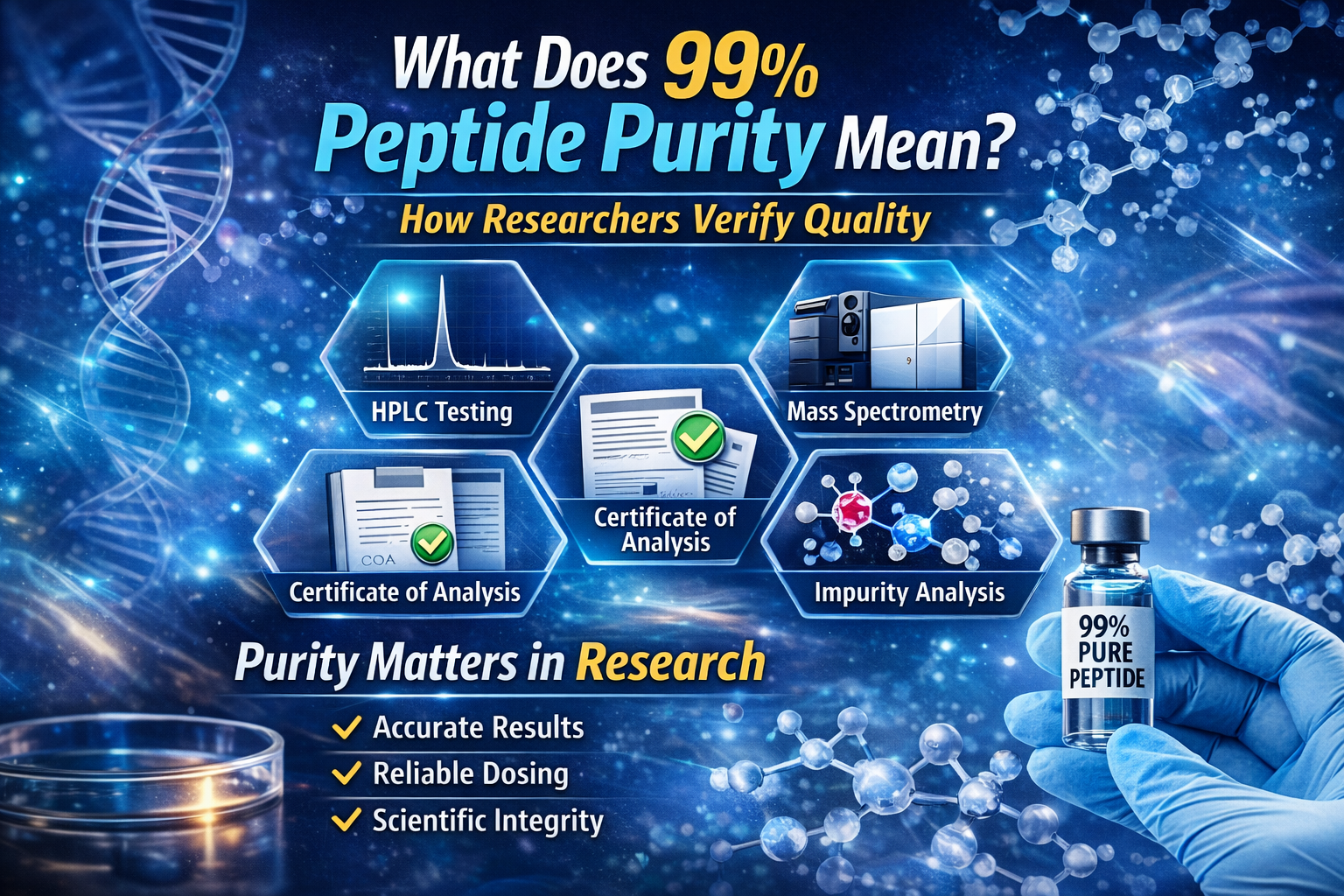
Stability needs to be confirmed utilizing logical techniques like HPLC to check pureness and mass spectrometry to validate the molecular weight matches the anticipated series.
The initial, bigger syringe deals with reconstitution jobs.
This seal stops atmospheric direct exposure and maintains the partial vacuum created during lyophilization.
Surface area binding (likewise called adsorption) is a problem that can place your study precision and reproducibility at risk.
Click here for more info Knowing which residues are most at risk helps you predict stability and choose ideal storage space problems. In general, the time for a reconstituted peptide to be kept in the fridge ranges from a few days to a few weeks, depending on the peptide sequence and storage space conditions. If longer storage is needed, lyophilized peptides can additionally be saved at -20 ° C or lower, which can remain steady Lyophilized Powder for several years. The peptides are steady at area temperature however depending upon the peptide and storage space problems, this might be different. Lyophilized peptides normally store at space temperature level for weeks to months (depending on the peptide and its storage). In regulated deterioration researches, typical research peptides saved in sealed vials at space temperature level (20-25 ° C )revealed very little degradation over day durations. These molecules are naturally delicate and can degrade if revealed to suboptimal conditions. Actually, many healing peptides need a cold-chain during storage and transport as a result of their instability in warmer atmospheres. Even as powders, peptides can undertake chemical changes (deamidation, oxidation, etc) or physical aggregation if subjected to heat, moisture, or oxygen.
What negates peptides?
Salicylic acid''s scrubing activity might undercut the peptides, decreasing their skin-repairing advantages. Suggestion: To stay clear of any kind of communication, use salicylic acid and peptide products at various times. For example, incorporate salicylic acid in your morning routine and peptides in your night regimen.
This procedure, called lyophilization, maintains the three-dimensional structure that provides each peptide its organic activity. Before metrology of a peptide by AAA, there are preliminaryconsiderations and experimental optimizations that should be resolved to achieveaccuracy. Initially, the pureness of the peptide need to be examined (46 ). Specifically, it needs to be identified whether thepeptide has any type of pollutants that can add to amino acids, prejudicing thequantitative AAA. Nevertheless, in the case of some particular peptides (methionine or cysteine), their stability could be subject to chemical reactions like oxidation. Methionine-based peptides, as an example, could oxidize much more in one month of space temperature level storage space. When lasting service storage space is required, multiple methods assist. Some peptides gain from added proteins that protect against surface area adsorption and gathering. Bovine serum albumin (BSA) at low focus shields certain peptides from sticking to glass vial walls and syringe surfaces. Acidic peptides might require a little fundamental reconstitution medium to completely dissolve.
Prefilling Syringes
Although less complex measurements are possible, ample qualitycontrol steps, such as those defined listed below, are needed to accomplish the requiredmeasurement goals. The life span of lyophilized peptides can vary from a couple of weeks to several years, depending on the storage space problems and the characteristics of the peptide. To ensure ideal security, it is recommended to store at reduced temperatures and stay clear of repeated freeze-thaw and light direct exposure. Additionally, very purifiedinternal criteria are crucial for the effective advancement and deployment ofclinical assays in a CLIA-regulated environment. However, crude peptides can beused for loved one quantification of peptide analytes in Tier 2 assays (2 ), gave that the efficiency of theresulting assay is meticulously assessed. Unrefined secure isotope-labeled peptides canalso serve for determining endogenous analyte, especially in complexmatrices such as cell and lump digests. Indications include raising inflammation, warmth, and discomfort in time. This requires clinical attention, not just method modification. Inflammation, swelling, or inflammation at shot websites can suggest several problems connected to peptide handling.